Financial Tools · Rent vs Buy
Rent vs Buy Calculator.
Rent and invest the difference, or buy and build equity? Compare both over your actual holding period, not a brochure timeline.
Your situation
Which leaves you richer
After 7 years, renting leaves you richer by
₹1.55 L
Buying pulls ahead in year 10, after the 7 you plan to stay.
If you buy, you hold
₹41.63 L
If you rent, you hold
₹43.18 L
Net worth after 7 years: home minus loan and selling costs for the buyer; invested savings plus the deposit back for the renter. Both start with the same cash.
Buying wins if prices grow more than 6.3% a year
You assumed 6%, so buying falls short of it. Over 7 years that growth rate is the line between the two. Look at the locality's past growth before trusting a number either side of it.
Owning costs ₹20,140 more a month at first
EMI ₹32,224 plus tax and upkeep makes ₹35,140 a month, against rent of ₹15,000. The EMI stays fixed while rent climbs to about ₹20,101 by year 7. Work out the loan.
Net worth, year by year
Where the lines cross is the year buying starts to win. Tax deductions are left out: they apply only under the old tax regime.
View the same figures as a table
| Year | If you buy | If you rent | Ahead |
|---|---|---|---|
| 1 | ₹12.84 L | ₹17.30 L | Renting |
| 2 | ₹16.92 L | ₹21.00 L | Renting |
| 3 | ₹21.27 L | ₹24.93 L | Renting |
| 4 | ₹25.89 L | ₹29.10 L | Renting |
| 5 | ₹30.81 L | ₹33.52 L | Renting |
| 6 | ₹36.05 L | ₹38.20 L | Renting |
| 7 | ₹41.63 L | ₹43.18 L | Renting |
| 8 | ₹47.56 L | ₹48.45 L | Renting |
| 9 | ₹53.88 L | ₹54.05 L | Renting |
| 10 | ₹60.60 L | ₹60.00 L | Buying |
| 11 | ₹67.76 L | ₹66.31 L | Buying |
| 12 | ₹75.39 L | ₹73.02 L | Buying |
| 13 | ₹83.50 L | ₹80.15 L | Buying |
Buying needs ₹13.8 L on day one, renting ₹1.5 L
That is your down payment plus ₹3.8 L of stamp duty and other buying costs, against a deposit you get back. The renter invests the difference; that is why both paths start level.
Buying costs ₹19.12 L in interest over 7 years
Plus ₹3.02 L of tax and upkeep, and ₹1.5 L to sell. Renting costs ₹14.66 L in rent. Only these are true costs: the part of each EMI that repays the loan becomes equity, so it counts in your net worth instead.
How this is worked out
- 1
Same cash, two paths
Both start with the same money. The buyer puts it into a home; the renter invests it. Each month, whoever spends less than the other invests the gap.
- 2
Net worth, not cost
Buyer: home value minus the loan still owed and the cost of selling. Renter: the invested pot plus the deposit back. Loan repayment is not a cost, because it becomes equity.
- 3
Growth decides it
Prices, rent increases and investment returns are guesses. That is why the page shows how much price growth buying needs, so you can judge it against your locality.
Free advisory
Renting wins by ₹1.55 L. Let us pressure-test that.
This model assumes a steady appreciation rate. Real returns depend on which project, which micro-market and which builder — the difference between a good Bengaluru address and a bad one is far wider than the gap this calculator just showed you.
Brokerage
ZERO
RERA
VERIFIED
Projects analysed
BENGALURU-WIDE
If buying wins
Browse all listingsBengaluru homes worth switching for.
The buy case only holds if the asset holds. These are RERA-verified Bengaluru projects, each scored on location, builder track record and rental fundamentals.

ready to_move
90Anvi Score
Assetz Marq - Resale
Whitefield, Bangalore
₹2.50 Cr
Onwards
3BHK, 4BHK, 2BHK1 sqft

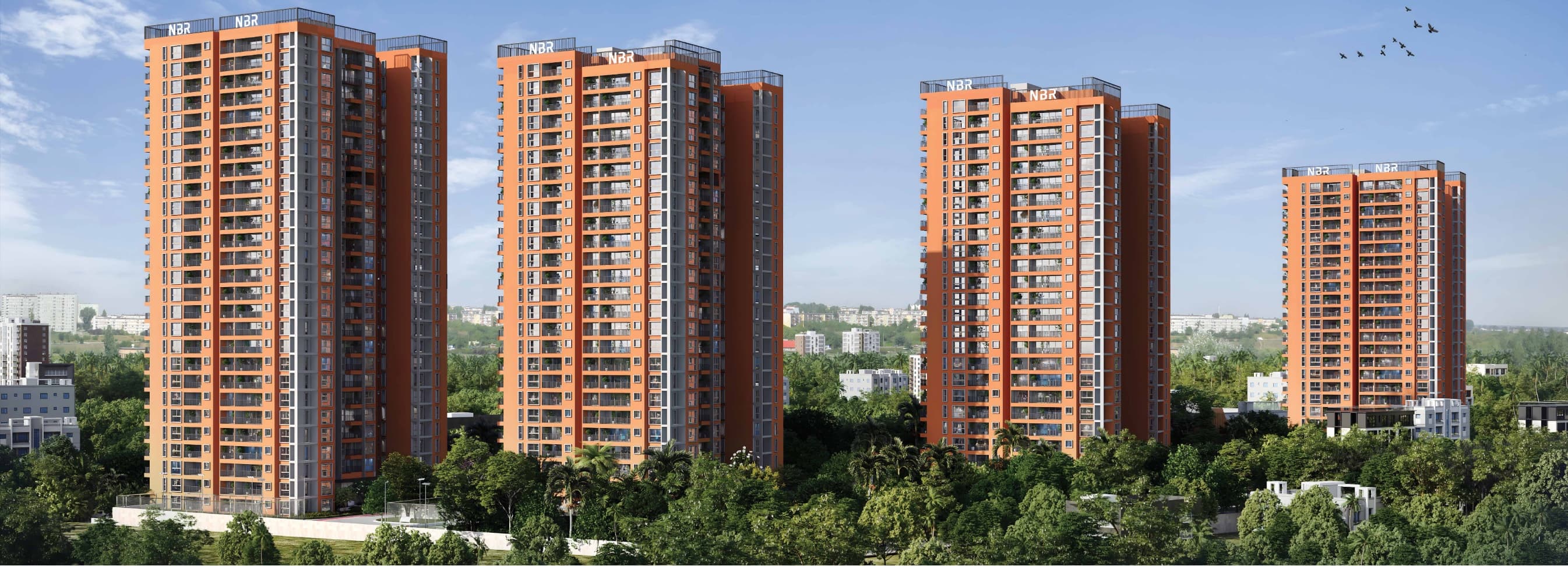


under construction
85Anvi Score
Brigade Citrine
Budigere Cross, Bangalore
₹2.07 Cr
Onwards
3BHK, 4BHK1738 sqft

under construction
80Anvi Score
Pushkalam Heritage
Budigere Cross, Bangalore
₹1.30 Cr
Onwards
2BHK, 3BHK1310 sqft
Rent vs buy questions, answered
The rent vs buy decision is one of the most significant financial choices you will make. Here are the key factors to consider.
Is buying always better than renting in the long run?
Not necessarily. Buying makes financial sense when property appreciation exceeds the opportunity cost of the down payment, and when you plan to stay in the same city for at least 5–7 years. If you move frequently or invest the down payment in higher-yielding assets, renting can be the smarter financial choice.
How much do prices need to grow for buying to beat renting?
It depends mostly on how long you stay. For a ₹50 lakh home with ₹10 lakh down and a ₹15,000 rent, buying needs prices to grow about 8.2% a year to win over 3 years, 6.9% over 5 years, 6.3% over 7 years and 5.9% over 10 years, with a 7.5% loan and savings earning 8%. The calculator works out this figure for your own numbers, so you can judge it against how your locality has actually grown.
What is the "break-even point" in a rent vs buy comparison?
It is the first year in which buying leaves you with a higher net worth than renting. This calculator tracks both paths month by month. The buyer's net worth is the home's value minus the loan still owed and the cost of selling; the renter's is an investment portfolio plus the returned deposit. Both start with the same cash, and whatever one path spends less on each month is invested. The chart shows where the two lines cross.
Why does this calculator not count my whole EMI as a cost?
Because part of every EMI repays the loan, and that part becomes equity in a house you own. Counting the full EMI as money gone, without crediting the home's value at the end, makes buying look far worse than it is. Only the interest portion, property tax, maintenance, stamp duty and selling costs are true costs of owning; the rest shows up in your net worth.
How does the down payment affect the rent vs buy calculation?
The down payment is a significant upfront cost that also has an opportunity cost — that money could have been invested. A higher down payment lowers your EMI but increases the capital you are tying up in an illiquid asset. The calculator factors in the potential return on this capital if invested elsewhere.
Should I account for rent escalation?
Yes. Rents in Indian cities typically escalate 5–10% per year. Over a 10-year period, a ₹30,000/month rent becomes ₹49,000–₹78,000. This escalation makes renting progressively more expensive over time and is a key factor that often tips the calculation in favour of buying for long-term residents.
What are the hidden costs of buying that are often ignored?
Beyond the EMI, buyers pay stamp duty and registration (7.6% of the property value in Bengaluru), property tax, society maintenance and, when they eventually sell, brokerage and other selling costs. This calculator includes all of these as inputs. It leaves out interiors, loan processing fees and home-loan tax deductions (which exist only under the old tax regime), so adjust the buying-costs figure if you want to include them.
When does renting clearly win over buying?
Renting wins when: you are uncertain about staying in the city for more than 3–4 years; property prices are high relative to rents (low rental yield signals an overpriced market); your investment portfolio is generating returns that outpace property appreciation; or you are early in your career and your income is likely to grow significantly.
Keep planning
Bangalore Rent Tracker
What your locality actually rents for, year on year.
Home Loan EMI Calculator
Monthly instalment, total interest and the full repayment schedule.
Rental Yield Calculator
Gross and net yield on a property you plan to let out.
Hidden Costs Calculator
GST, khata, deposits and the charges nobody quotes upfront.
Pre-EMI Calculator
What an under-construction home costs you before possession.
AI Investment Score
Score the project you are buying into before you commit.